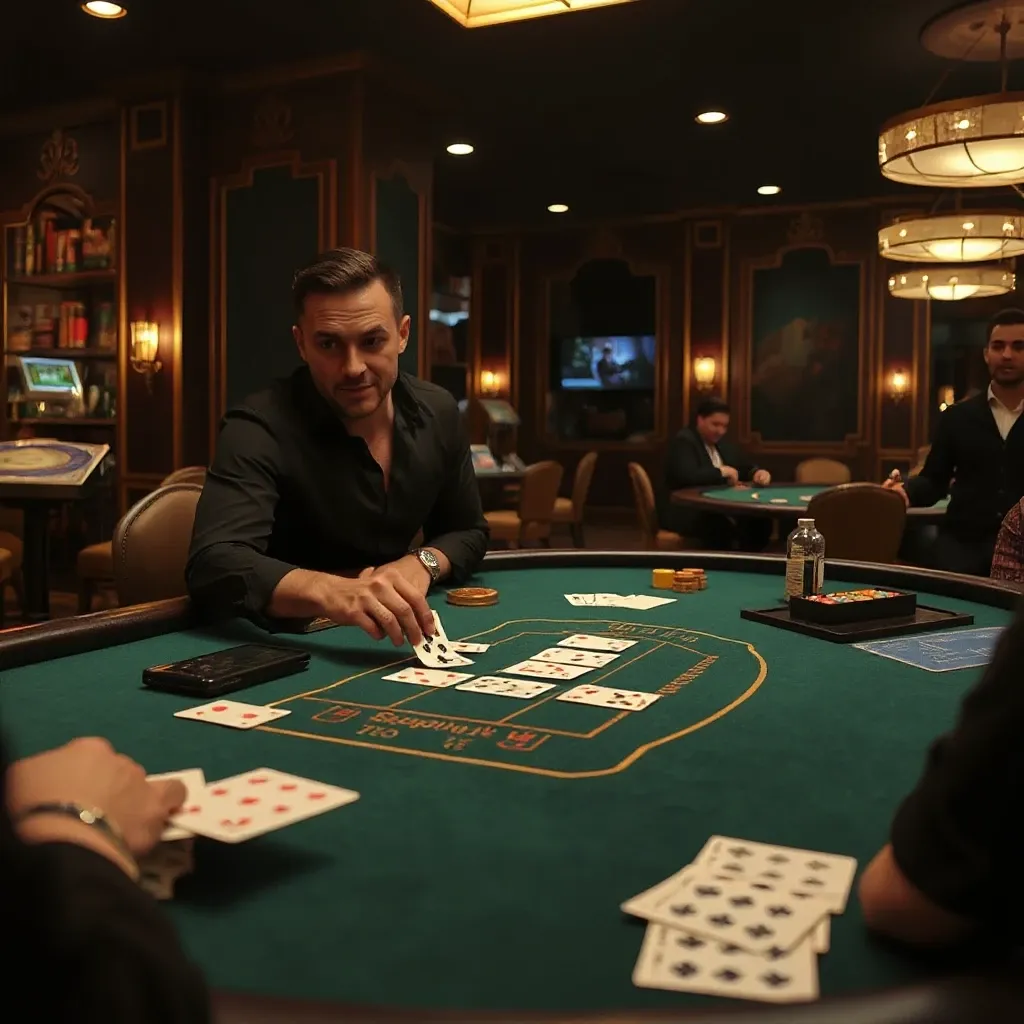
Blackjack, a casino game that has been attracting players for generations, holds the promise of excitement and potential winnings. Part of its appeal lies in the perception that blackjack offers some of the most favorable odds compared to other casino games. However, understanding the true odds of blackjack requires more than just knowing the basic rules. It demands a strategic approach.
The alluring odds associated with blackjack aren’t simply handed out; they are earned through knowledge, skillful decision-making, and a commitment to mastering proven strategies. Many casual players fall prey to common misconceptions, believing luck is the primary factor. As an expert in the field, this guide aims to dispel those myths and equip you with the understanding necessary to maximize your chances of success at the blackjack table. By delving into the intricacies of the game and providing clear, actionable insights, this resource will transform you from a casual player to a strategic one, capable of making informed decisions that positively impact your odds.
Understanding the Basics of Blackjack
Blackjack, a casino staple, seems simple on the surface, but understanding its core mechanics is crucial before diving into odds and strategy. The goal is straightforward: beat the dealer’s hand without exceeding 21. Exceeding 21 is called “busting,” and results in an automatic loss.
Here’s a breakdown of essential blackjack rules and terminology:
- The Hand: You and the dealer each receive an initial hand, typically two cards. Your cards are usually face up, while one of the dealer’s cards is face down (the “hole card”).
- Card Values: Numbered cards (2-10) are worth their face value. Face cards (Jack, Queen, King) are worth 10. An Ace can be worth either 1 or 11, depending on which value benefits the hand most.
- Hit: To “hit” means to request another card from the dealer. You can hit as many times as you like, as long as your hand’s total value doesn’t exceed 21.
- Stand: To “stand” means to end your turn and keep your current hand. You should stand when you believe your hand is strong enough to beat the dealer, or when you’re close to 21.
- Double Down: “Doubling down” allows you to double your initial bet in exchange for receiving only one additional card. This is a strategic move usually employed when you have a strong starting hand.
- Split: If you’re dealt two cards of the same value (e.g., two 8s), you can “split” them into two separate hands. You must then place another bet equal to your initial bet on the new hand. Each hand is then played independently.
Sample Hand: Imagine you’re dealt a 10 and a 6, giving you a total of 16. The dealer shows a 7. In this scenario, you might choose to “hit,” hoping to get a low card. If you draw a 5, your hand becomes 21 – a great outcome! However, drawing a 6 or higher would cause you to bust.
Mastering these basic blackjack rules and understanding the terminology is the first step towards playing strategically and evaluating the odds of winning.
Decoding the Odds: The House Edge Explained
Ever wonder how casinos stay in business? It all boils down to something called the “house edge.” Simply put, the house edge is the casino’s statistical advantage in any given game. It represents the difference between the true odds of winning and what the casino pays out. Think of it as a built-in profit margin that ensures the casino makes money over the long run.
For example, in a game like roulette, betting on a single number has a much lower probability of success than it does in Blackjack. However, if you have managed to guess the right number, the payout doesn’t truly reflect those odds — the casino takes a cut. This “cut” is the house edge. It’s often expressed as a percentage, indicating how much of each bet the casino expects to keep on average.
The house edge is not a guarantee that you’ll lose every time you play. Luck still plays a significant role in the short term. However, over thousands of bets, the house edge will grind away, slowly shifting the probability in the casino’s favor. Understanding the house edge allows players to make informed decisions, choosing games with lower edges and employing strategies to minimize the casino’s advantage and maximize their potential return to player (RTP).
Why Blackjack Offers Better Odds Than Other Casino Games
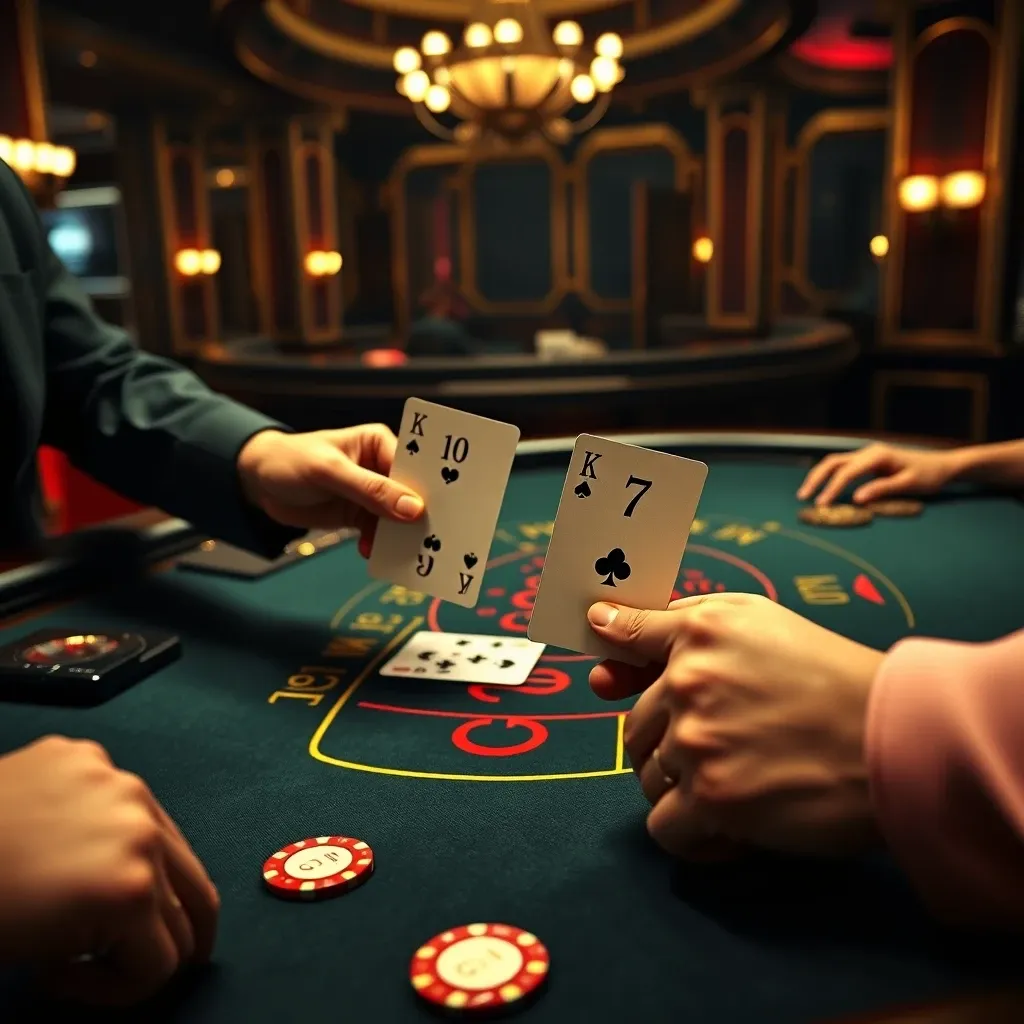
Blackjack often stands out as a casino game offering players a potentially better chance of winning. This advantage stems from the fact that, unlike many other games of chance, Blackjack involves a degree of player skill and decision-making that directly impacts the outcome. Let’s see how it stacks up against other popular choices.
When considering games like Roulette, the house edge is quite static. Whether you bet on red, black, or a specific number, the casino’s advantage remains relatively constant. Similarly, Slot machines are notoriously unpredictable, with house edges that can vary widely and are often difficult for players to ascertain. Baccarat offers slightly better odds depending on the bet, but still relies heavily on luck.
Blackjack distinguishes itself because players make choices – to hit, stand, double down, or split – that influence the game’s trajectory. Skilled players can leverage these decisions to minimize the house edge.
Here’s a quick comparison of typical house edges:
| Game | Typical House Edge |
|---|---|
| Blackjack (with optimal play) | 0.5% – 1% |
| Baccarat | Around 1% (on Banker bet) |
| Roulette (American) | 5.26% |
| Slots | 2% – 15% (or higher) |
As you can see, Blackjack, when played strategically, offers a significantly lower house edge compared to Roulette and often Slots. While Baccarat can be close, the player’s ability to make informed choices in Blackjack provides an additional layer of control over the odds, making it a potentially more favorable option for those looking to increase their chances of winning.
Mastering Basic Strategy: Your Key to Favorable Odds
Blackjack, unlike many casino games, offers skilled players a legitimate chance to significantly reduce the house edge. The cornerstone of this advantage lies in mastering basic strategy. This isn’t a hunch-based guessing game; it’s a mathematically derived system that dictates the optimal play for every possible hand you could be dealt, against any visible dealer upcard.
Think of basic strategy as your blackjack bible. It provides a clear, data-backed answer to the question that plagues every player: should I hit or stand? Should I double down or split? It removes the emotional element and replaces it with cold, hard probability.
Understanding the Blackjack Chart
The blackjack chart is the visual representation of basic strategy. It’s typically presented as a table. Your hand runs along one axis (usually the left), and the dealer’s upcard runs along the other (usually the top). The intersection of your hand and the dealer’s card tells you the optimal play. Let’s look at a simplified version:
Simplified Basic Strategy Chart
| Your Hand | Dealer’s Upcard (2-6) | Dealer’s Upcard (7-Ace) |
|---|---|---|
| Hard 12 | Stand | Hit |
| Hard 13-16 | Stand | Hit |
| Hard 17+ | Stand | Stand |
| Ace-7 (Soft 18) | Stand | Hit |
| Ace-8+ (Soft 19+) | Stand | Stand |
Reading the Chart: “Hard” hands are those without an Ace being counted as 11. “Soft” hands include an Ace being counted as 11. If you have a hard 12 and the dealer shows a 4, the chart says “Stand.” If you have a soft 18 (Ace-7) and the dealer shows a 9, the chart says “Hit.”
The Importance of Consistency
Here’s the thing: Basic strategy isn’t magic. It works because it’s based on long-term probabilities. Deviating from optimal play, even once, increases the house edge. I remember once seeing a player with a hard 16 against a dealer’s 10. The chart screams “Hit!” But he went with his gut, stood, and busted on the next card anyway. He ranted about trusting his instincts, but his instincts cost him. The lesson? Trust the math, not your feelings. Consistent application of blackjack strategy is crucial to reduce house edge. Embrace it, study it, and stick to it. Your wallet will thank you.
Advanced Strategies: Taking Your Game to the Next Level
For players seeking to push the boundaries of blackjack strategy, techniques like card counting offer a potential, albeit challenging, path. Card counting involves assigning values to cards (positive, negative, or neutral) as they are dealt to maintain a running count. This count theoretically provides an indication of whether the remaining deck is rich in high cards (favorable to the player) or low cards (favorable to the dealer). By adjusting bet sizes according to the count, players aim to capitalize on advantageous situations.
However, it’s crucial to understand that card counting is not a simple trick or a guaranteed method for winning. It requires significant skill, focus, and practice to execute effectively. The advantage gained through card counting is typically small, and variations in the game can quickly erode any potential profit. Furthermore, casinos actively discourage card counting and may ask suspected counters to leave.
Beyond card counting, other advanced blackjack strategies exist, such as shuffle tracking (attempting to predict the order of cards after a shuffle) and Wonging (entering and exiting games based on favorable counts). These techniques are even more complex and carry their own set of risks and challenges.

Rule Variations and Their Impact on Odds
Blackjack isn’t just about knowing basic strategy; it’s also about understanding how different rule variations can swing the odds in favor of the house, or even slightly in your favor! Savvy players recognize that not all blackjack games are created equal, and the rules in place significantly impact your chances of winning.
Dealer Hits Soft 17
One of the most impactful rule differences is whether the dealer hits or stands on a “soft 17.” A soft 17 is a hand containing an Ace counted as 11, along with cards totaling six (e.g., Ace-6). When the dealer hits a soft 17, the house edge increases. Why? Because the dealer has the potential to improve their hand, and while they can bust, that added risk to their hand ultimately benefits the casino more often than not.
Number of Decks
The number of decks used in a blackjack game also affects the house edge. Generally, the fewer the decks, the better your odds. Single-deck blackjack typically offers the best odds, assuming other rules are favorable. As the number of decks increases (double-deck, six-deck, or eight-deck games are common), the house edge creeps up. This is because a higher number of decks dilutes the probability of getting specific card combinations that are advantageous to the player.
Surrender Options
The availability of surrender options is another key rule to consider. “Surrender” allows you to forfeit your hand after the initial deal, receiving half of your bet back. There are typically two types of surrender: early and late. Early surrender (allowing you to surrender before the dealer checks for blackjack) is much more favorable to the player, but it’s rare! Late surrender (allowing you to surrender after the dealer checks for blackjack) is more common, and still beneficial in certain situations, reducing the house edge.
Ultimately, understanding these rule variations is crucial for making informed decisions about where to play blackjack. Always look for games where the dealer stands on soft 17, use fewer decks, and offer surrender options (especially early surrender, if you can find it!). By carefully selecting games with favorable rules, you can significantly improve your odds and increase your chances of walking away a winner.
Common Blackjack Myths Debunked
Blackjack, a game blending skill and chance, is unfortunately fertile ground for myths and misconceptions. These unfounded beliefs can lead players astray, costing them money and diminishing their enjoyment. It’s time to dismantle some of the most persistent blackjack myths.
One prevalent myth is the idea of always splitting 10s. The logic sounds appealing – doubling your potential payout. However, statistically, holding a 20 is a strong position against most dealer upcards. Splitting weakens your hand and increases the risk. Another damaging myth involves the insurance bet. Players often believe that if the dealer shows an Ace, taking insurance is a smart move to protect against a dealer blackjack. In reality, the insurance bet is a side bet with unfavorable odds, a simple distraction from the main table game that benefits greatly the house. Avoiding this bet improves your odds in the long run.
Many players fall victim to gambling fallacies, believing that past events influence future outcomes. For example, some think a dealer who has had a string of high cards is “due” for a bust. Each hand in blackjack is independent. The cards dealt in previous hands have absolutely no impact on the cards to come. The deck doesn’t have a memory. Superstitions, like lucky charms or rituals, are harmless fun but have no basis in mathematical or statistical reality. Blackjack is a game of probabilities, and relying on hunches or superstitions is a losing strategy. Sticking to statistically sound decisions is the key to success.
Responsible Gambling: Playing Smart and Staying in Control
Responsible gambling is about making informed choices and staying in control. It’s easy to get swept up in the excitement, but setting limits before you start is crucial. Decide how much time and money you’re willing to spend, and stick to those limits, no matter what. Think of it as entertainment, not a way to make money. The odds are always in the house’s favor.
Gambling addiction can sneak up on you. A friend of mine once found himself chasing losses, convinced he could win it all back with one big bet. He ended up in debt and strained his relationships. It took him a while to admit he had a problem, but once he did, he sought help and turned things around.
If you or someone you know is struggling with problem gambling, resources are available. Don’t hesitate to reach out to organizations that offer support and guidance. Remember, responsible gambling is about enjoying the game without letting it take over your life.
Conclusion
Blackjack distinguishes itself by providing players with potentially favorable odds, but this advantage hinges significantly on the application of strategic gameplay. Mastering basic strategy is essential, serving as the bedrock for informed decision-making at the table. An astute player must also remain vigilant regarding the nuances of rule variations, as these subtle differences can exert a tangible impact on the house edge.
Ultimately, responsible gambling practices are paramount. Blackjack, like any form of gambling, carries inherent risks, and maintaining control over one’s spending and playing habits is crucial. The journey to becoming a proficient blackjack player is ongoing, demanding a commitment to continuous learning and adaptation. By embracing strategy, understanding the rules, and prioritizing responsible play, individuals can enhance their enjoyment of the game while simultaneously improving their chances of success.